
OpenMPT is a popular tracker software for Windows. OpenMPT (short hand for Open ModPlug Tracker) is completely free and allows you to create and play back some great music on your computer. Based on the original ModPlug Tracker written by Olivier Lapicque, OpenMPT is free software, can import a wide variety of module formats and offers an intuitive, native GUI as well as advanced features such as VST plugins and ASIO output.
In addition to its own song format, OpenMPT can natively edit Impulse Tracker, FastTracker, Scream Tracker and ProTracker module files. Read more about it on the features page!
major bugfix: Pattern tab
Upon data entry, the status bar display was not updated unless playback was running.
potential crash when trying to move the cursor past the start or end of a pattern when the order list is empty (http://.openmpt.org/view.php?id=1854).
Sample tab.
Imp Pressing Ctrl while moving loop points or clicking loop start / end spin buttons now moves the loop, keeping the loop length constant.
Imp Cue preview shortcuts now set the cue point if it's currently unused and the sample is being previewed (http://.openmpt.org/view.php?id=1852).
Time stretching didn't update cue points.
Playback.
Default velocity for instrument plugins was broken in OpenMPT 1.31.13.00 (tx coda).
MIDI Macros: An unfinished byte right before an "s" SysEx checksum macro letter was not considered in the checksum.
Avoid NNA channel starvation due to sample-based instruments that have a MIDI channel assigned and NNA set to "Continue". It can still happen if a VST plugin or the MIDI I/O plugin is associated with the instrument. Other built-in plugins are not affected (http://.openmpt.org/view.php?id=1848).
XM.
Imp Warn when saving an instrument that references more than 16 (compatibility export) or 32 samples (http://.openmpt.org/view.php?id=1846).
Imp Identify XMs saved with Digitrakker that were converted from other formats.
In non-compatible linear slide mode, the sample rate could wrap around with portamento slides to extremely low frequencies. This should only happen in compatible mode.
Other formats.
Imp MO3: XM dummy command W is now imported.
ITP: Instruments paths were always read as relative paths since OpenMPT 1.31.01.00, usually causing them to fail to load.
ITP: Since OpenMPT 1.28.01.00, instrument and envelope flags were no longer read correctly.
Misc.
Imp Fine tempo adjustment shortcuts now also work with formats that don't support fractional tempo.
Imp "Find MPT Hacks" now warns when an XM instrument uses mo
 BSDL-2 audio tracker BSDL-2 audio tracker
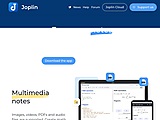
Joplin is a free, open source note taking and to-do application, which can handle a large number of notes organised into notebooks. The notes are searchable, can be copied, tagged and modified either from the applications directly or from your own text editor. The notes are in Markdown format.
Notes exported from Evernote can be imported into Joplin, including the formatted content (which is converted to Markdown), resources (images, attachments, etc.) and complete metadata (geolocation, updated time, created time, etc.). Plain Markdown files can also be imported.
Joplin is "offline first", which means you always have all your data on your phone or computer. This ensures that your notes are always accessible, whether you have an internet connection or not.
The notes can be securely synchronised using end-to-end encryption with various cloud services including Nextcloud, Dropbox, OneDrive and Joplin Cloud.
Full text search is available on all platforms to quickly find the information you need. The app can be customised using plugins and themes, and you can also easily create your own.
minor feature: lt;ul gt;.
lt;li gt;Improved: Plugins: Add Toast plugin API lt;/li gt;.
lt;li gt;Updated translations lt;/li gt;.
lt;/ul gt;.
Affero GPLv3 note-taking todo markdown typescript javascript

Syncthing is a continuous file synchronization program. It synchronizes files between two or more computers. We strive to fulfill the goals below. The goals are listed in order of importance, the most important ones first.
Syncthing should be:
Safe From Data Loss
Protecting the user's data is paramount. We take every reasonable precaution to avoid corrupting the user's files.
Secure Against Attackers
Again, protecting the user's data is paramount. Regardless of our other goals, we must never allow the user's data to be susceptible to eavesdropping or modification by unauthorized parties.
Easy to Use
Syncthing should be approachable, understandable, and inclusive.
Automatic
User interaction should be required only when absolutely necessary.
Universally Available
Syncthing should run on every common computer. We are mindful that the latest technology is not always available to every individual.
For Individuals
Syncthing is primarily about empowering the individual user with safe, secure, and easy to use file synchronization.
Everything Else
There are many things we care about that don't make it on to the list. It is fine to optimize for these values, as long as they are not in conflict with the stated goals above.
minor feature: lt;p gt;v1.29.0 lt;/p gt;.
lt;p gt;: lt;/p gt;.
lt;ul gt;.
lt;li gt; lt;a class="-link js--link" data-error-text="Failed to load title" data-id="2723449858" data-permission-text="Title is private" data-url="https://github.com/syncthing/syncthing//9855" data-hovercard-type="" data-hovercard-url="/syncthing/syncthing//9855/hovercard" href="https://github.com/syncthing/syncthing//9855" gt;#9855 lt;/a gt;: GUI address unix socket broken lt;/li gt;.
lt;li gt; lt;a class="-link js--link" data-error-text="Failed to load title" data-id="2745087362" data-permission-text="Title is private" data-url="https://github.com/syncthing/syncthing//9872" data-hovercard-type="" data-hovercard-url="/syncthing/syncthing//9872/hovercard" href="https://github.com/syncthing/syncthing//9872" gt;#9872 lt;/a gt;: When socket files are in a folder that needs to be synced on linux, some files were not synced until the socket files were removed lt;/li gt;.
lt;li gt; lt;a class="-link js--link" data-error-text="Failed to load title" data-id="2746332510" data-permission-text="Title is private" data-url="https://github.com/syncthing/syncthing//9875" data-hovercard-type="" data-hovercard-url="/syncthing/syncthing//9875/hovercard" href="https://github.com/syncthing/syncthing//9875" gt;#9875 lt;/a gt;: Clarify log message for ignored folders lt;/li gt;.
lt;/ul gt;.
lt;p gt;Other : lt;/p gt;.
lt;ul gt;.
lt;li gt; lt;a class="-link js--link" data-error-text="Failed to load title" data-id="2740469955" data-permission-text="Title is private" data-url="https://github.com/syncthing/syncthing//9870" data-hovercard-type="" data-hovercard-url="/syncthing/syncthing//9870/hovercard" href="https://github.com/syncthing/syncthing//9870" gt;#9870 lt;/a gt;: Fails with Go 1.24: runtime go1.24rc1 not found in compat.yaml lt;/li gt;.
lt;/ul gt;.
MPL syncronization file-syncronization peer-to-peer p2p backup archiving networking go html javascript
Part-DB is an open source inventory managment system with a focus on electronic components. It allows you to keep track of your inventory and locate it easily. It supports multiple users with different permissions and is therefore useful for personal use, for hackerspaces/makerspaces, universities and small companies. Part-DB runs on your server and only needs a web browser for access, so you can access your inventory from everywhere you want, no matter if you are on a PC, a tablet or your smartphone.
Part-DB can manage datasheets, parameters and many more infos of your electronic parts. It can generate and read barcodes/labels and makes finding the part you need very easy using powerful search and filter possibilities.
minor feature: Revert "Removed baarcode scanner inbox, as we now have enough perform
ance to apply the decoder to the full image".
This reverts commit de0832b.
Affero GPLv3 front-end database php symfony education science-research manufacturing ham-radio electronics inventory

Use other desktops remotely, from a tiny screen or large monitors.
RDP, VNC, SPICE, X2Go, SSH, WWW (HTTP protocol) and EXEC network protocols are supported.
Written in GTK, with a port to Qt underway.
Released as "remmina" (the main program) and "remmina-plugins".
minor bugfix: REM-3260 passing wrong value in SPICE plugin (Breaking compilation on some distributions) !2624 *@myheroyuki*.
GNU GPLv3 rdp vnc ssh gtk qt remote-desktop c
SoX reads and writes audio files in most popular formats and can optionally apply effects to them. It can combine multiple input sources, synthesize audio, and, on many systems, act as a general purpose audio player or a multi-track audio recorder.
minor feature: Bug fixes:
o Make reading from ffmpeg work by popen()ing "rb"
GNU GPL audio dsp command-line

Gambas is an IDE and BASIC interpreter with object-oriented extensions.
It's designed to ease building graphical applications programs using
Gtk+ or Qt, and runs on most Unix and Linux systems. With its runtime
standalone applications can be packaged, even command-line programs.
The Gambas3 JIT-compiling interpreter often executes faster than Perl
or Python apps.
It also supports SDL, OpenGL and OpenAL, MySQL or PostgreSQL databases,
CGI webserver interfacing,
minor feature: Among the hundreds of and enhancements, the main features of this release are the following: In the development environment.
Translation an version control dialogs were replaced by workspaces...
Every calls of a specific function or symbol can be retrieved in one click...
Deging external running processes is far easier...
A complete redesign of the search that is a lot faster now.
Otherwise.
New database components mostly written in Gambas that supersedes the old ones...
A new tool that generates packages configuration files automatically for the openSUSE build service...
A new GUI component gb.qt6 for Qt6...
A new component gb.mongodb for accessing MongoDB databases...
A new component gb.clipper2 that should replace gb.clipper...
The JIT compiler now implements a cache, so that compilation occurs only the first time your program runs.
Compilation and installation.
Read the instructions there.
If everything was fine, type "gambas3" to run the development environment.
Enjoy it !.. Changelog. CONFIGURATION.
Update lunar
GNU GPL c++ c basic interpreter ide developers x11 gtk kde curses sdl
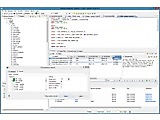
DBeaver is a free multi-platform database tool for developers, SQL programmers, database administrators and analysts. Supports all popular databases: MySQL, PostgreSQL, SQLite, Oracle, DB2, SQL Server, Sybase, Teradata, MongoDB, Cassandra, Redis, etc.
minor feature: Dbeaver/pro#3911 AI and SQL control commands
Dbeaver/pro#3911 AI and SQL control commands.
Dbeaver/pro#3911 AI and SQL control commands.
Dbeaver/pro#3741 System agent service.
Dbeaver/pro#3911 AI and SQL control commands.
Dbeaver/pro#3911 AI and SQL control commands.
Dbeaver/pro#3911 AI and SQL control commands.
Dbeaver/pro#3911 SQL output formatting.
Dbeaver/pro#3911 AI error messages.
Dbeaver/pro#3911 AI command.
Dbeaver/pro#3911 Support custom context.
Dbeaver/pro#3911 Disable datasource check in headless products.
Co-authored-by: kseniaguzeeva lt;112612526+kseniaguzeeva@users.noreply.github.com gt;.
GNU GPL database front-end sql java

CJIT is a C interpreter that lets you run C code instantly, without needing to build it first. It is just one small file and can do everything a C compiler does, including call functions from any installed library. It works on Linux, Windows, and MacOSX.
minor feature: Executable size is down below 1MB. Now can also compile C code linking system and custom shared libraries, used as a drop-in replacement of gcc and clang. Many documentation updates.
GNU GPLv3 software-development compiler interpreter c

An ansible role to create QEMU disk images.
minor feature: Enable run_once on installation tasks
* Execute installation tasks only once to allow parallel execution of roles on the same host e.g. With delegate_to
MITL ansible role qemu

The LedgerSMB project provides small and mid-size businesses with solid open source accounting software: integrating invoicing, order processing, quotations and more (ERP). LedgerSMB aims to provide a strong (multi-currency accounting) basis to build your business on -- without vendor lock-in.
The project team considers correctness and performance equally important key usability features and is dedicated to providing both, even on the biggest data sets.
Sales (Invoices, Orders, Quotations)
Receivables & Payables
General ledger
Inventory management
Fixed asset accounting & depreciation
Profit & cost centers, departments, projects
Output documents in PDF, HTML, CSV, Office formats
Mail documents (e.g. invoices) from within the application
Translatable to your language (comes with 45 languages)
and more
The fact that LedgerSMB is open source
- meaning that the source code is freely available - makes it even more customizable and flexible.
minor bugfix: The LedgerSMB development team is happy to announce yet another new
version of its open source ERP and accounting application.
This release contains the following fixes and improvements:
Changelog for 1.12.1
* Ignore Content-Type header on GET requests (#8562)
* Fix persisting of E-mail workflows without attachments (#8564)
* Fix printing of GL and cash transfer transactions (#8580)
* Fix error of Cash Use AR Overpayment menus (#8582)
For installation instructions and system requirements, see
https://github.com/ledgersmb/LedgerSMB/blob/1.12.1/README.md
The release can be downloaded from our download site at
https://download.ledgersmb.org/f/Releases/1.12.1
The release can be downloaded from GitHub at
https://github.com/ledgersmb/LedgerSMB/releases/tag/1.12.1
Or pulled from the GitHub Container Registry
docker pull ghcr.io/ledgersmb/ledgersmb:1.12.1
Or pulled from Docker Hub using the command
docker pull ledgersmb/ledgersmb:1.12.1
These are the sha256 checksums of the uploaded files:
de9377bdbff18d3e2f3622115e0db0aee70c546030132961d029d6976348c152 ledgersmb-1.12.1.tar.gz
37268f86bd4c7bb5e7679e270c9221ec7013360892ccf1cbe7b3e12d06647f1c ledgersmb-1.12.1.tar.gz.asc
GNU GPL accounting invoicing orders erp perl postgresql bookkeeping web
An ansible role to install libvirt/KVM packages and enable the libvirtd service.
Supported GNU/Linux Distributions
* Archlinux
* AlmaLinux
* Centos
* Debian
* Fedora
* RedHat
* Rocky
* Suse
* Ubuntu
minor feature: run_once enabled
* Added examples
* Documentation updated
* run_once enabled to allow parallel execution
* replace the apt with package
* become: true missing for a non-root only scenario
MITL ansible role libvirt kvm

FlexGet is a multipurpose automation tool for content like torrents, nzbs, podcasts, comics, series, movies, etc. It can use different kinds of sources like RSS-feeds, html pages, csv files, search engines and there are even plugins for sites that do not provide any kind of useful feeds.
minor feature: all commits.
Changed.
.
Strictly ignore 19xx-20xx from episode parsing.
Strictly ignore 19xx-20xx from episode parsing.
.
MITL download internet torrents bittorrent python
SoX reads and writes audio files in most popular formats and can optionally apply effects to them. It can combine multiple input sources, synthesize audio, and, on many systems, act as a general purpose audio player or a multi-track audio recorder.
minor feature: Bug fixes:
o Make reading from ffmpeg work by popen()ing "rb"
GNU GPL audio dsp command-line
Use other desktops remotely, from a tiny screen or large monitors.
RDP, VNC, SPICE, X2Go, SSH, WWW (HTTP protocol) and EXEC network protocols are supported.
Written in GTK, with a port to Qt underway.
Released as "remmina" (the main program) and "remmina-plugins".
minor bugfix: Full changelog
REM-3257 Add option to automatically copy ssh text when selected !2624 *@myheroyuki*.
REM-2604 Allow -c to work with www plugin !2604 *@myheroyuki*.
REM-3256 Don't prompt about closing connections with no connections !2625 *@myheroyuki*.
Mainly ing memory leaks and some small !2626 *@myheroyuki*.
GNU GPLv3 gtk qt remote-desktop c
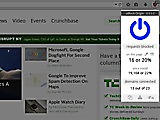
µBlock Origin is an efficient and general-purpose web filter plugin for browsers. It's primarily used for ad blocking of course. Runs in Firefox, Chrome, Opera Blink, Safari, Fennec, and other Chromium-based browsers. It automatically uses EasyList, EasyPrivacy and Malware Domain filter lists, but also supports hpHosts, MVPS HOSTS, Spam404 and many other curated block lists. µBlock is speedier and more memory conservative than other ad blockers, and is completely open source, does not undermine filtering like ADPs sponsored ads.
major feature: ## / changes- deserialization of ArrayBuffer shared by multiple TypedArrays.
Improve `trusted-suppress-native-method` scriptlet.
Improve `urlskip=` filter option.
Improve `parse-properties-to-match` scriptlet helper.
Improve `href-sanitizer` scriptlet.
Improve quote usage in filter options and scriptlets.
Improve `trusted-suppress-native-method` scriptlet.
Improve `trusted-replace-argument` scriptlet.
Block media elements unconditionally when max size is set to 0.
- Regression from .
Visually separate scriptlet parameters in active line.
Mitigate potentially delayed execution of scriptlets in Firefox.
Improve `prevent-setTimeout`/`prevent-setInterval` scriptlets.
Improve `trusted-replace-argument` scriptlet.
Add `-safebase64` directive to `urlskip=` option.
Improve `urlskip=` filter option.
Improve `spoof-css` scriptlet.
Improve `trusted-set-attr` scriptlet.
Add support for EasyList ` remove: true ` cosmetic filter syntax.
Keep moving related scriptlets into separate files.
Improve `prevent-xhr` scriptlet.
Improve `trusted-suppress-native-method` scriptlet.
Improve `set-cookie` scriptlet.
GNU GPLv3 javascript browser ad-blocker filter privacy
Dropbear is a relatively small SSH server and client. It runs on a variety of unix platforms. Dropbear is open source software, distributed under a MIT-style license. Dropbear is particularly useful for "embedded"-type Linux (or other Unix) systems, such as wireless routers.
minor bugfix: failure on concurrent channel open/. This was a regression in 2022.82, reported by rsflo in Github #321. failed assertion in common-channel.c:705: !channel- sent_. Print remote host after "Login attempt for nonexistent user" log entry to assist fail2ban. from MichaIng, the format changed in 2020.79. Dropbear now exits with exit status 0 on SIGINT/SIGTERM. This is a more graceful behaviour for "systemctl stop dropbear". Reported by Ninad Palsule. New IDENT_VERSION_PART config allows customising some of the SSH version string. From Marius Dinu. building SK_KEYS with just one of ECDSA or ED25519 From Marius Dinu. dbclient "-m help" and "-c help" without a hostname. Patch from Darren Tucker. Remove fprintf/gettimeofday from sigchld handler when running with verbose trace enabled. Improved configure help output, from Mikel Olasagasti Uranga. Compile for GNU Hurd, from Guilhem Moulin. Support running test_aslr without venv, from Guilhem Moulin. Compilation for older compilers, and better build tests. Update some test infrastructure versions of python packages, github actions, and github runner OSes.
Mixed ssh client server c tex

Native Docker-like solution for macOS developed by Okerew. It has it own containers. It leverages native macOS features to provide containerization capabilities, albeit with some limitations compared to Docker.
minor feature: Added support for running gui apps
EPL docker macos okerew c alternative apple osx native solution containers darwin darwin-core isolated image-container isolated-environments
BallroomDJ 4 is a ballroom music player. It is designed to play music the entire evening without intervention. Manage your ballroom dance music and create song lists, automatic playlist and sequenced playlists.
BallroomDJ 4 is the replacement for BallroomDJ.
minor feature: 4.12.9 2025-1-4
* Changes:
* Player: Status: A timer indicator is shown when the playback is in a start-wait or in-gap state.
* New Features:
* Music Queue: Added "Start Wait Time" for use when practicing or teaching.
Zlib audio music end-users linux macos windows player ballroom c gtk

Free C++ library for video effects processing that completely relies on GPU.
minor bugfix: - Fix a bug when compiling in shaders, that could cause errors with certain shader compilers. Reported by Stefano Rivera.
GNU GPLv3 gpu video filters cpp

Evolution is a personal information management application that provides integrated mail, calendaring and address book functionality.
minor feature:
GNU GPL email calendar office task organization

SVR.JS is a web server running on Node.JS, that's free as in freedom, scalable, secure, and configurable.
minor feature: Added req.rewriteURL() method for request URL rewriting.. Corrected spelling errors.. The res.writeHead() method is now chainable.. Updated dependencies.
MITL http-server javascript system-administrators information-technology
Snd is a sound editor modelled loosely after Emacs. It can be customized and extended using either s7 (included in the Snd sources), Ruby, or Forth.
minor feature: s7: added s7_function_let as an experiment
Checked: sbcl 2.4.11.
Thanks!: Da Shen, Robert Clausecker, chrg.
Public Domain sound-synthesis sound-editor audio music scheme c ruby

Scintilla is a free source code editing component. It comes with complete source code and a license that permits use in any free project or commercial product.
As well as features found in standard text editing components, Scintilla includes features especially useful when editing and debugging source code. These include support for syntax styling, error indicators, code completion and call tips. The selection margin can contain markers like those used in debuggers to indicate breakpoints and the current line. Styling choices are more open than with many editors, allowing the use of proportional fonts, bold and italics, multiple foreground and background colours and multiple fonts.
minor feature: Released 18 December 2024.
on Qt where double-click stopped working when Scintilla instance had been running for weeks.
GNU GPL ide editor programming coding code-editor cpp
CMOC is a 6809-generating cross-compiler for a large subset of the C language. It produces executables for the Motorola 6809 processor to be used under the Tandy Color Computer Disk Basic environment, OS-9 and others. It runs under GNU/Linux and other Unix-like environments.
minor feature: Added a "de-optimization" option -fno-omit-frame-pointer to tell the compiler to keep the frame pointer in a register for every function that is not a pure assembly language function. This can help determine the call stack up to the main() function.
Fixed an optimization bug in ASMText::removeUselessOps() that introduced a bug in some switch() statements when also using --no-relocate.
GNU GPLv3 compiler c developers

Linux is a mostly POSIX-compliant Unix-inspired operating system kernel, originally implemented by Linus Torvalds and now maintained as an international project. It's the base and common namegiver to a wide array of Linux distributions. The kernel provides all modern Unix-y features, like true process multitasking, virtual memory, virtual and clustered filesystem support, complex networking and extensive support for various hardware and machine platforms.
minor feature: Linux 6.12.8, ALSA: sh: wrong argument order for copy_from_iter(), ALSA: ump: Shut up truncated string warning, Bluetooth: btusb: mediatek: change the conditions for ISO interface, Bluetooth: btusb: mediatek: add intf release flow when usb disconnect, Bluetooth: btusb: mediatek: add callback function in btusb_disconnect, Bluetooth: btusb: mediatek: move Bluetooth power off command position, btrfs: check folio mapping after unlock in relocate_one_folio(), btrfs: check folio mapping after unlock in put_file_data(), btrfs: use-after-free when COWing tree bock and tracing is enabled, btrfs: sysfs: direct super block member reads, btrfs: transaction atomicity when enabling simple quotas, btrfs: swap file activation failure due to extents that used to be shared, btrfs: avoid monopolizing a core when activating a swap file, btrfs: race with memory mapped writes when activating swap file, power: supply: gpio-charger: set charge current limits, power: supply: cros_charge-control: hide start threshold on v2 cmd, power: supply: cros_charge-control: allow start_threshold == end_threshold, power: supply: cros_charge-control: add mutex for driver data, perf/x86/intel/ds: Add PEBS format 6, i2c: microchip-core: "ghost" detections, i2c: imx: add imx7d compatible string for applying erratum ERR007805, perf/x86/intel: bitmask of OCR and FRONTEND events for LNC, PCI/MSI: Handle lack of irqdomain gracefully, virt: tdx-guest: Just leak decrypted memory on unrecoverable errors, x86/fred: Clear WFE in missing-ENDBRANCH #CPs, i2c: microchip-core: actually use repeated sends, io_uring/sqpoll: sqpoll error handling races, rtla/timerlat: histogram ALL for zero samples, tracing: Prevent bad count for tracing_cpumask_write, tracing: Constify string literal data member in struct trace_event_call, perf/x86/intel/uncore: Add Clearwater Forest support, dmaengine: loongson2-apb: Change GENMASK to GENMASK_ULL, freezer, sched: Report frozen tasks as 'D' instead of 'R', objtool: Add bch2_trans_unlocked
GNU GPL c linux kernel operating-system

The stunnel program works as SSL encryption wrapper between remote and local network sockets or inetd-started daemons. It adds SSL or TLS functionality to any network service, commonly POP3, IMAP or HTTP servers. Stunnel uses OpenSSL for cryptography. It can itself function as port redirection deamon, or as temporary traffic interceptor, and requires no adaption of the shadowed programs.
minor feature: a stapling cache deallocation crash.. "redirect" with protocol negotiation.
Features.. "protocolHost" support for "socks" protocol clients.. More detailed logs in OpenSSL 3.0 or later.
GNU GPL ssl tls network-daemon inetd security network c
Samhain is a file integrity / intrusion detection system that can be used on single hosts as well as on networks. It been designed to monitor multiple hosts with potentially different operating systems, providing centralized logging and baseline database storage, although it can also be used as standalone application on a single host.
bugfix: This release fixes a bug causing a segfault on startup if compiled as static binary and the host name is unresolveable. Also problems with autoreconf have been fixed.
GNU GPL log-analysis security monitoring posix macos windows bsd linux system-administrators

Poppler is librarified PDF rendering toolkit derived from the Xpdf 3.0 code base. It can utilize X11-independent rendering backends like Cairo, Splash, or Qt4 Arthur. It's not designed for platform-agnosticy, but proper BSD/Linux integration; is used by various PDF applications (Evince, Okular, TeXStudio, pdftotext, Zathura, Xournal, Inkscape), and comes with a set of command-line tools of its own.
major bugfix: Core: TextOutputDev: Better detect fakebold words. TextOutputDev: Faster sorting algorithm. Internal code improvements. Crashes in malformed documents. Cpp: Remove rect parameter from image::copy, it was never implemented. Qt6: Crash in Submit Forms if document links to non existing field. Qt5: Crash in Submit Forms if document links to non existing field. Glib: Mark transfer of poppler_page_get_selected_region. Utils: Pdfdetach: Make -savefile work with Unicode strings. build system: Don't update pdfsig.pot when POT-Creation-date is the only change.
GNU GPL c++ pdf rendering library developers

QMMP is an Qt-based audio-player. The user interface is similar to Winamp or XMMS, which compatible skins can be used of. It supports a plethora of audio formats, like MP3, Ogg Vorbis/Opus, FLAC, Musepack, WavePack, MOD files, AAC, Audio CDs, WMA and other ffmpeg-supported encodings, PCM, MIDI, SID, and Chiptune files. It provides DSP plugins, lyrics downloading, equalizers and visualizers, supports common audio APIs and sinks, and is cross-platform.
minor bugfix: simple WildMidi config validation; updated AppStream metadata; fixed build without X11 support; fixed volume level notification; fixed dts/ac3 support in the ffmpeg plugin; improved CUE support; updated Korean translation.
GNU GPL audio player qt6 mp3

git-annex allows managing files with git, without checking the file contents into git. While that may seem paradoxical, it is useful when dealing with files larger than git can currently easily handle, whether due to limitations in memory, checksumming time, or disk space.
Even without file content tracking, being able to manage files with git, move files around and delete files with versioned directory trees, and use branches and distributed clones, are all very handy reasons to use git. And annexed files can co-exist in the same git repository with regularly versioned files, which is convenient for maintaining documents, Makefiles, etc that are associated with annexed files but that benefit from full revision control.
When a file is annexed, its content is moved into a key-value store, and a symlink is made that points to the content. These symlinks are checked into git and versioned like regular files. You can move them around, delete them, and so on. Pushing to another git repository will make git-annex there aware of the annexed file, and it can be used to retrieve its content from the key-value store.
minor feature: Added config `url..annexInsteadOf` corresponding to git's.
`url..pushInsteadOf`, to configure the urls to use for accessing.
The git-annex repositories on a server without needing to configure
Remote.name.annexUrl in each repository.
Work around git hash-object --stdin-paths's odd stripping of carriage.
Return from the end of the line (some windows infection), avoiding
Crashing when the repo contains a filename ending in a carriage return.
Document that settting preferred content to "" is the same as the.
Default unset behavior.
Sync: Avoid misleading warning about future preferred content.
Transition when preferred content is set to "".
Honor annex.addunlocked configuration when importing a tree from a.
Special remote.
Removed the i386ancient standalone tarball build for linux, which.
Was increasingly unable to support new git-annex features.
Removed support for building with ghc older than 9.0.2.
And with older versions of haskell libraries than are in current Debian
Stable.
Stack.yaml: Update to lts-23.2.
-- Joey Hess Wed, 01 Jan 2025 14:22:59 -0400.
Mixed git archive haskell

Calculate or lookup network addresses easily.
Supports CSV file formats for network information lists.
minor feature: don't require input to be one IP per line
show subnets within network in format, suggested by andy@bitfolk.com
limit how much an encapsulating network can grow with --group
GNU GPLv3 internet networking terminal console information-technology telecommunications-industry system-administrators

Screen dump (SCDP), Waveform dump (WF) and Digital Voltmeter (DVM) for the Siglent® SDS 1202X-E and similar oscilloscopes, along with gnuplot instructions for waveform display, command errata and references.
major feature: "Digital Voltmeter" (DVM) using terminal escape sequences added to sig_utils.
Public Domain siglent sds oscilloscope scdp wf screen dump waveform voltmeter dump math fft gnu linux
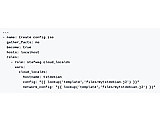
An Ansible role to create cloud-init config disk images.
major bugfix: * Added missing CIDATA volume id for xorriso provider
* Added Suse to supported platforms
MITL ansible role cloud-init
Django Ledger is a double entry accounting system based on the Django Web Framework, which aims to power financially driven applications by removing the complexity of the accounting domain into a simple, high-level API. Prior experience with Django is required to more effectively use this software.
minor feature: lt;h2 gt;What #39;s Changed lt;/h2 gt;.
lt;ul gt;.
lt;li gt;V0.7.1 by lt;a class= quot;user-mention notranslate quot; data-hovercard-type= quot;user quot; data-hovercard-url= quot;/users/elarroba/hovercard quot; data-octo-click= quot;hovercard-link-click quot; data-octo-dimensions= quot;link_type:self quot; href= quot;https://github.com/elarroba quot; gt;@elarroba lt;/a gt; in lt;a class= quot;-link js--link quot; data-error-text= quot;Failed to load title quot; data-id= quot;2760225745 quot; data-permission-text= quot;Title is private quot; data-url= quot;https://github.com/arrobalytics/django-ledger//234 quot; data-hovercard-type= quot;pull_request quot; data-hovercard-url= quot;/arrobalytics/django-ledger/pull/234/hovercard quot; href= quot;https://github.com/arrobalytics/django-ledger/pull/234 quot; gt;#234 lt;/a gt; lt;/li gt;.
lt;/ul gt;.
lt;p gt; lt;strong gt;Full Changelog lt;/strong gt;: lt;a class= quot;commit-link quot; href= quot;https://github.com/arrobalytics/django-ledger/compare/v0.7.1...v0.7.2 quot; gt; lt;tt gt;v0.7.1...v0.7.2 lt;/tt gt; lt;/a gt; lt;/p gt;.
.
elarroba.
.
.
.
.
tag:github.com,2008:Repository/155289518/v0.7.1.
2024-12-26T23:51:17Z.
.
GNU GPLv3 accounting money finances bookkeeping django python

Krusader is an advanced twin panel (commander style) file manager for KDE Plasma and other desktops in the *nix world, similar to Midnight or Total Commander. It provides all the file management features you could possibly want. Plus:
Extensive archive handling
Mounted filesystem support
File transfers with (S)FTP
Advanced search module
Copy/move queues
An internal viewer and editor
Directory synchronisation
File content comparisons
Powerful batch renaming
And much much more ...
It supports a wide variety of archive formats and can handle other KIO slaves such as smb or fish. It is (almost) completely customizable, very user friendly, fast and looks great on your desktop! You should give it a try.
major bugfix: ADDED: Improve deging kioslaves by using environment variables and also stdout instead of a separate log file.
ADDED: Save settings on crash and when signals are received.
: 462086 Segmentation fault when using CTRL+Left/Right on a panel with invalid path.
: 462307 File icons are drawn at wrong position if desktop scaling is active.
: 474596 Krusader always crashes after drag-n-drop several files on info bar.
: 476194 In more cases, the default behavior in Synchronizer should be to overwrite files.
: 480319 "Synchronized browsing mode" between panels ignored when user uses "Back" or "Forward" button.
: 485225 Krusader with mime types after P6 update.
: 485865 Sharing from Krusader results in org.kde.kdeconnect is not installed error.
: 486731 Krusader is unable to create thumbnails for pdf and other document/book formats and video formats appear as a static image instead of creating a preview for them.
: 488241 Export and compress entry in context menu is missing.
: 496184 Krviewer does not update window caption when file is saved with different name.
: Flickering during folder space calculation.
file-manager file-explorer kde cpp c

Mikmod is a module player and library supporting many formats, including mod, s3m, it, and xm. Originally a player for MS-DOS, MikMod has been ported to other platforms, such as Unix, Macintosh, BeOS, and Java(!!)
Mikmod main authors are Jean-Paul Mikkers (MikMak), Jake Stine (Air Richter) and Frank Loemker. Steve McIntyre was the first Unix maintainer, followed by Peter Amstutz, Miodrag Vallat and finally Raphaël Assénat.
Unfortunately, since Raphaël Assénat did not have enough free time to work on MikMod those days, releases somewhat came to an halt. This is why he handed the baton to Shlomi Fish in order to add new features, fix bugs and bring the project further. As of September 2013, Shlomi handed the baton to Ozkan as the maintainer for the project.
minor bugfix: - Add WebAudio support (see webaudio/README.md for details.)
- Dynamically load pulseaudio library at runtime.
- New configuration option to exclude module depackers (off by default.)
- Fix high cpu usage in ALSA output driver (reported by David Lindsay.)
- Add WinMM driver (drv_win) command line options for buffer size and
count (github bug #29, PR #30.)
- Merge vibrato tables/math, fix tremolo ramp down, fix IT vibrato.
(github PR #28.)
- Fix XM fine volume slide effects (was broken between libmikmod-3.1.6
and 3.1.7 - github PR #20.)
- Changed XM effect L to behave correctly (e.g. Graff/ant attack.xm or
villgust.xm - github PR #56.)
- Implement MODPlugin ADPCM4 support (github PR #57 and #61.)
- Fix playback of Impulse Tracker modules with more than 99 instruments
(e.g. many MPT-created ITs -- github bug #33.)
- Fix MOD retrigger (E9x) effect bug that would cause it to always
retrigger on tick 1. (github bug #21, PR #22.)
- Fix handling of FAR pattern break byte (github bug #5.)
- Add support for Mod's Grave WOW files to MOD loader (github bug #7.)
- Detect more MOD variants: TDZ#, FA04/6/8, LARD, NSMS (github PR #59.)
- Check M K! and CD61 signatures in Octalyser modules (github PR #12.)
- Don't load STM samples with volume==0, fix sample offset calculation
(github bug #6.)
- Fix volume event handling for FAR modules. (github PR #14.)
- Multiple fixes to FAR modules: (github PR #37)
* Fix player to handle empty patterns.
* Handle invalid pattern numbers in position list.
* Add support for effect 1 and 2 (porta slide up/down).
* Implement effect 3 (tone porta) the right way.
* Play with the real tempos.
* Support for effects D and E (fine tempo up/down).
* Fix effect 6 (vibrato).
* Fix effect 4 (retrigger) by adding a new effect.
* Fix bug in the sample loader when loading 16-bit samples.
* Support for restart position.
- Fix GDM empty notes, fine volslide/portamento, and sample volume.
(github PR #15.)
- Fix GDM set pan positio
GNU LGPL audio music player library c
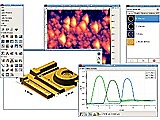
Gwyddion is a modular SPM (Scanning Probe Microsope) data visualization and analysis tool. It can be used for all most frequently used data processing operations including: leveling, false color plotting, shading, filtering, denoising, data editing, integral transforms, grain analysis, profile extraction, fractal analysis, and many more. The program is primarily focused on SPM data analysis (e.g. data obtained from AFM, STM, NSOM, and similar microscopes). However, it can also be used for analyzing SEM (scaning electron microscopy) data or any other 2D data.
major feature: Version 3.0 It lives! was released. It is a development milestone in porting to new GTK+, Python, etc. It does not contain any new features. In fact, a number of features are still disabled or buggy. You can compile it from source code if you are interested and it should mostly work. But at this stage there is not much reason to do so.
GNU GPL c scientific engineering visualization physics image analysis spm microscopy

libxmp is the backend library for XMP which provides playback of MOD audio files. Over 90 formats are supported, PC as well as ancient home computer variants, including standard MOD files, S3M, XM, and IT files.
minor bugfix: Changes by Claudio Matsuoka:
The full library is now under MIT license
Changes by Alice Rowan:
- Add stereo sample loading support for IT, S3M, XM, MED, LIQ, and
Digital Tracker (partial).
- Add sample preamplification to filter mixers for high sample rates.
- Add support for Ultra Tracker tempo commands.
- Load Ultra Tracker comments instead of skipping them.
- Implement support for Protracker instrument swapping.
- Implement retrigger effects for MED, OctaMED, and Liquid Tracker
where only one retrigger occurs. Liquid Tracker (new format) and
Digital Symphony now allow retrigger values larger than 15.
- XM envelope sustain points that exist on a zero-length loop.
- XM extra fine portamento effect memory.
- XM portamento up and portamento down memory (only for modules
where FT2 compatibility is enabled, for now).
- loading edge case STMs with an EOF byte of 2.
- loading Imago Orpheus modules with null instrument magic
strings, bidirectional samples, and disabled default panning.
- Faster IT loading by buffering pattern, sample, and comment reads.
- loop detection edge cases broken by S3M/IT marker scan.
- Add for IT break to module scan (was missed in libxmp 4.5.0.).
- restart position for 64k sample and Digital Tracker MODs.
- Reset Invert Loop position when a new instrument is encountered.
- MOD: make presence of invert loop override tracker ID guesses.
M.K. modules within Amiga limits which use EFx invert loop are
now IDed as Protracker.
- Multiple Digital Tracker :
Support for loading Digital Tracker 2.03 DTMs (MOD patterns).
Support for loading Digital Tracker 1.9 DTMs (VERS/SV19).
Better Digital Tracker version fingerprinting.
Digital Tracker 2.03 global sample rate and bit depth fields.
Digital Tracker 2.04 pattern note loading (was off-by-one).
Digital Tracker instrument loops (loop end was off-by-one).
Allow patterns up to 396 rows in Digital Home Studio DTMs.
Support for Digital Tracker 1.9 "MIDI note" transpose.
Simulate Digital Tracker effects where po
GNU LGPLv2 c module audio library

Core Features of ParaView
Displaying Data -You can create different views to visualize data simultaneously and easily identify corresponding data elements. These views can also be customized (e.g. creating C++ plugins to add new types of views).
Filtering Data
Transform your data to generate visualizations that are easier to understand using ParaView filters. While an extensive list of filters is already provided, you can add custom filtering operations through Python scripting via a plugin or with a Programmable Filter.
Querying Data -Besides selecting data in various views interactively, ParaView provides a way to inspect the data by querying for elements that satisfy certain criteria using the “Find Data” dialog. The UI makes it easy to build simple queries to find matching elements. Complex queries are also possible using a Python-based syntax.
Animations -When you open a file with multiple timesteps, ParaView automatically sets up an animation. You can use the “Animation View” to set up complex animations involving changes to parameters of filters or sources, and you can move the camera to orbit around the dataset, along an arbitrary path, or follow data as it moves over time. Generated animations can be exported in common video formats (e.g. AVI, OGG, etc.) or as a series of PNG or JPEG image files.
Exporting Scenes -You can export rendered scenes from ParaView in formats used by 3D rendering tools (e.g. VRML, X3D, and GEO). They can then be imported into other renderi
minor feature: ParaView tags
https://gitlab.kitware.com/paraview/paraview/-/tags.. https://gitlab.kitware.com/paraview/paraview/-/tags/v5.13.2.
v5.13.2. ParaView superbuild 5.13.2.
Vicente Adolfo Bolea Sanchez. vicente.bolea@kitware.com.
https://gitlab.kitware.com/paraview/paraview/-/tags/v5.13.1.
v5.13.1. 5.13.1.
John Tourtellott.
https://gitlab.kitware.com/paraview/paraview/-/tags/v5.13.0.
v5.13.0. 5.13.0.
Vicente Adolfo Bolea Sanchez. vicente.bolea@kitware.com.
https://gitlab.kitware.com/paraview/paraview/-/tags/v5.13.0-RC2.
v5.13.0-RC2. 5.13.0-RC2.
Vicente Adolfo Bolea Sanchez. vicente.bolea@kitware.com.
https://gitlab.kitware.com/paraview/paraview/-/tags/v5.13.0-RC1.
v5.13.0-RC1. 5.13.0-RC1.
Ryan Krattiger. ryan.krattiger@kitware.com.
https://gitlab.kitware.com/paraview/paraview/-/tags/v5.12.1.
v5.12.1. 5.12.1.
Ryan Krattiger. ryan.krattiger@kitware.com.
https://gitlab.kitware.com/paraview/paraview/-/tags/v5.12.0.
v5.12.0. 5.12.0.
Ryan Krattiger. ryan.krattiger@kitware.com.
https://gitlab.kitware.com/paraview/paraview/-/tags/v5.12.0-RC3.
v5.12.0-RC3. 5.12.0-RC3.
Ryan Krattiger. ryan.krattiger@kitware.com.
https://gitlab.kitware.com/paraview/paraview/-/tags/v5.12.0-RC2.
v5.12.0-RC2. 5.12.0-RC2.
Ryan Krattiger. ryan.krattiger@kitware.com.
https://gitlab.kitware.com/paraview/paraview/-/tags/v5.12.0-RC1.
v5.12.0-RC1. 5.12.0-RC1.
Ryan Krattiger. ryan.krattiger@kitware.com.
https://gitlab.kitware.com/paraview/paraview/-/tags/v5.11.2.
v5.11.2. 5.11.2.
Ryan Krattiger. ryan.krattiger@kitware.com.
https://gitlab.kitware.com/paraview/paraview/-/tags/v5.11.1.
v5.11.1. 5.11.1.
Ryan Krattiger. ryan.krattiger@kitware.com.
https://gitlab.kitware.com/paraview/paraview/-/tags/v5.11.1-RC1.
v5.11.1-RC1. 5.11.1-RC1.
Ryan Krattiger. ryan.krattiger@kitware.com.
https://gitlab.kitware.com/paraview/paraview/-/tags/v5.11.0.
v5.11.0. 5.11.0.
Cory Quammen. cory.quammen@kitware.com.
https://gitlab.kitware.com/paraview/paraview/-/tags/v5.11.0-RC2.
v5.11.0-RC2. 5.11.0-RC2.
Vicente Adolfo Bolea Sanchez. vic
Mixed scientific visualization fem finite element analysis medical cpp python c
|

