
Ardour is an audio processing and editing application. It integrates broad hardware support, JACK and ALSA backends, flexible recording features, multi-channel nesting, import and exporting various file formats, comes with ready to use samples from freesound.org. It has a pretty editing UI, mixing, routing, monitoring, panning. Ardour allows non-destructive and non-linear editing, can be used for augmenting audio layers in video files even. And comes with many effect, input and output plugins. It's open source, but asks for donations on the download page for prebuilt binaries.
minor bugfix: rdour 8.12 is a hotfix release that contains an improved (hopefully correct this time) fix for a critical workflow-blocking bug. All users of 8.10 and/or 8.11 and all Linux distributions should upgrade to 8.12 as soon as possible.
The bug occurs whenever the user is working on a session using musical time as the default time domain (Session Properties Misc). If they carry out any operation that causes Ardour to write a modified copy of existing audio data to a new file (such as timestretching, pitch-shifting or reversing), there is a very high probability that they will be unable to reopen the session in the future. Such sessions can be recovered manually with a text editor, but this is not an acceptable pattern for our users.
8.12 also finally gets the packaging of translation files on macOS working again.
 GNU GPL c audio editor jack multimedia music soundtrack conversion mixing audio-processing audio-effects sampling midi GNU GPL c audio editor jack multimedia music soundtrack conversion mixing audio-processing audio-effects sampling midi

"Firefly III" is a self-hosted financial manager. It can help you keep track of expenses, income, budgets and everything in between.
minor bugfix: :
(lower piggy amount when full creates double audit log entry) reported by @4e868df3.
(Can't retrieve all accounts with the same name via API) reported by @Toshik1978.
(User preferences reset after restart) reported by @mico28.
(API: `TransactionSplit` - `transaction_journal_id` returns int, not String) reported by @dreautall.
(include net worth is ignored in the API - from PICO developer) reported by @fate8383.
(Reconciliation on Docker instance) reported by @benjaminteyssier.
(Data import, currency #0 not found) reported by @ragnarkarlsson.
(Invalid server configuration: missing required package) reported by @EricVanCaenenberghe.
(Creating a Liability Account Throws TypeError in TransactionJournalFactory::setUser()) reported by @mikeashi.
Affero GPLv3 finance personal financial budget budgeting money manager management currency sums financials bookkeeping self-hosted php laravel

GNU poke is an interactive, extensible editor for binary data. Not limited to editing basic entities such as bits and bytes, it provides a full-fledged procedural, interactive programming language designed to describe data structures and to operate on them.
minor feature:
GNU GPLv3 binary editor gnu

Rspamd is an advanced spam filtering system featuring support for various internal and external filters such as regular expressions, suffix tries, RBLs, URL black lists, IP lists, SPF, DKIM, character maps, advanced statistics module (based on OSB-Bayes algorithm) and fuzzy hashes database that is generated based on honeypots traffic.
Rspamd is designed to process hundreds of messages per second simultaneously without significant CPU load.
minor bugfix: 10 Mar 2025
* GPT plugin improvements
* RBL module fixes
* Other features
* Other fixes
https://rspamd.com/announce/2025/03/10/rspamd-3.11.1.html
Apache email-filter antispam c lua

Univention Corporate Server (UCS) is our open integration platform offering centralized Identity & Access Management (IAM) with Nubus with a web portal. It enables management of heterogeneous IT domains with comprehensive Active Directory functions.
-Portal with Single Sign-On
-Integrated IAM
-Packaged integrations
-App Center with enterprise applications
-Active Directory integration
-Platform for your entire IT
-Operation on-premise, in the cloud, or hybrid
UCS is a scalable all-in-one solution for managing your entire IT infrastructure. The centerpiece is Nubus, which allows you to manage identities, roles, and groups. The integrated portal with Single Sign-On and Self-Service functions serves as a central access point for IT services and applications. A wide range of enterprise applications is available in our Univention App Center.
UCS is ideal for managing distributed, heterogeneous, and virtualized IT environments, whether using Microsoft Windows, Mac OS, or Linux. Integrated IT infrastructure management allows centralized management of server and desktop systems via an easy-to-use web interface.
Thanks to standardized interfaces, UCS can be easily integrated into your existing IT environment. Comprehensive Active Directory functions enable seamless integration with Microsoft Windows environments.
Find out more about UCS on our website: https://www.univention.com/products/ucs/
Click here to download the free UCS Core Edition: https://www.univention.com/download-ucs/
major feature: On march 11th, 2025, UCS 5.2-1 was released.
Release notes with all details at:
https://docs.software-univention.de/release-notes/5.2-1/en/
Affero GPLv3 identity-access-management it-infrastructure-management active-directory-migration domain-management samba-4 app-center linux-distribution
SIP swiss army knife.
minor feature:
GNU GPL sip telephony cli c
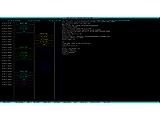
sngrep is a terminal tool that groups SIP (Session Initiation Protocol) Messages by Call-Id, and displays them in arrow flows similar to the used in SIP RFCs.
The aim of this tool is to make easier the process of learnig or debugging SIP.
Features:
* Capture SIP packets from devices or read from PCAP file
* Supports UDP, TCP and TLS (partially) transports
* Allows filtering using BPF (Berkeley Packet Filter)
* Save captured packets to PCAP file
minor bugfix: capture: fix possible buffer overflow while processing RTP payload
GNU GPLv3 sip telephony trace terminal pcap diagnostic c

ImageMagick® is software toolset and library to create, edit, compose, or convert bitmap images. It supports easy cropping, resizing and distorting, combining and morphing, colorizations, animations, applying effects or decorations, adding text, polygons and Bézier curves.
Supported image formats include PNG, JPEG, JPEG-2000, GIF, SVG, TIFF, DPX, EXR, PDF and Postscript.
IM is comprised of the command line tools convert, identify, mogrify, composite, montage, compare, stream, display (with editing GUI), animate, import and conjure for scripting. And there are bindings for Ada, C, COM+, C++, Java, Lisp, haXe, .NET, PHP, Python, Ruby and Tcl.
minor bugfix: Merged:
Type casting in statistic.c `#7982`.
Magick++ Documentation Verification `#7906`.
Enable Floyd-Steinberg as dither for Magick::Image::map() `#7937`.
Bump azure/trusted-signing-action from 0.5.0 to 0.5.1 `#7895`.
Commits:
Beta release.
Latest documentation update.
Corrected Q8 values..
Also run the PerlMagick unit tests in the daily build..
Update configure options for the daily build..
Improved error reporting in the perl unit tests..
Corrected unit test values..
Perl unit tests for the Q32 and Q64 builds..
Switch from ubuntu-latest to ubuntu-24.04 to silence warnings..
Perl unit test for the Q64 build..
Support svg:embedding define.
Install dependences of codeql analysis..
Run apt commands with sudo instead..
Corrected year..
Support accelerated MSE similarity compare.
Support accelerated RMSE and PSNR metrics.
PSNR acceleration.
Framework for in-progress phase metric.
Support phase correction as a compare metric.
Add similarity metric to compare output.
Remove normalized value from phase metric.
Add distortion to NCC metric.
.
Memory leak in beta release.
Cosmetic.
Warning..
Adjust NCC metric similarity score.
Output for NCC metric.
Phase metric is most similar as it approached 1.0.
Silence warning again..
Reverted patch from #5555 to resolve from #7876..
Correct MSE metric and clean up code.
Restored support for reading "http images" with the same delegate as we use for https to resolved the reported in #7881. This was removed with the libxml2 in #7784..
Correct PSNR metric.
Prevent integer overflow.
Renamed variables to make it more clear what it's used for..
Renamed more variables..
Make it more clear we only support 8-bit gamma integer as the storage type and added support for all development versions..
Correct PSNR metric.
Correct NCC metric.
Cosmetic.
Prevent possible ssize overflow.
Improved error message when reading or writing png data files..
Correct PSNR metric.
Scale PSNR correlation image.
Apache c graphics image-manipulation image-magick graphics-conversion

Exiv2 is a C++ library and a command-line utility to read, write, delete and modify Exif, IPTC, XMP and ICC image metadata.
minor feature: Changes from version 0.28.4 to 0.28.5
Release Notes:
https://github.com/Exiv2/exiv2//3181.
https://github.com/Exiv2/exiv2/milestone/16?=1.
This release a use-after-free vulnerability in `tiffcomposite_int.cpp`:
CVE-2025-26623.
Versions prior to v0.28.0, such as v0.27.7, are not affected by CVE-2025-26623.
Changes from version 0.28.3 to 0.28.4.
Release Notes:
https://github.com/Exiv2/exiv2//3149.
https://github.com/Exiv2/exiv2/milestone/15?=1.
Changes from version 0.28.2 to 0.28.3.
Release Notes:
https://github.com/Exiv2/exiv2//3008.
https://github.com/Exiv2/exiv2/milestone/14?=1.
This release also a low-severity security in asfvideo.cpp:
CVE-2024-39695: out-of-bounds read in AsfVideo::streamProperties.
This vulnerability is in a new feature (ASF video) that was added in version 0.28.0, so earlier versions of Exiv2 are not affected.
Changes from version 0.28.1 to 0.28.2.
Release Notes:
https://github.com/Exiv2/exiv2//2914.
https://github.com/Exiv2/exiv2/milestone/13?=1.
This release also two low-severity security in quicktimevideo.cpp:
CVE-2024-24826: out-of-bounds read in QuickTimeVideo::NikonTagsDecoder.
CVE-2024-25112: denial of service due to unbounded recursion in QuickTimeVideo::multipleEntriesDecoder.
These vulnerabilities are in a new feature (quicktime video) that was added in version 0.28.0, so earlier versions of Exiv2 are not affected.
Changes from version 0.28.0 to 0.28.1.
Release Notes:
https://github.com/Exiv2/exiv2//2813
This release also CVE-2023-44398, an out-of-bounds write in `BmffImage::brotliUncompress`. The vulnerability is in new code that was added in version 0.28.0, so earlier versions of Exiv2 are not affected.
Changes from version 0.27.6 to 0.28.0.
Release Notes:
https://github.com/Exiv2/exiv2//2406#comment-1529139799
Changes from version 0.27.5 to 0.27.6.
https://github.com/Exiv2/exiv2/milestone/10?=1
Open:
https://github.com/Exiv2/exiv2/milestone/10?open=1
Release Notes:
https://github.com/Exiv2/exiv2//2406#comment-1383302378
Changes fro
Mixed command-line cli image metadata cpp

Jellyseerr is a free and open source software application for managing requests for your media library. It integrates with the media server of your choice: Jellyfin, Plex, and Emby. In addition, it integrates with your existing services, such as Sonarr, Radarr.
Features
Full Jellyfin/Emby/Plex integration. Login and manage user access with Jellyfin/Emby/Plex.
Syncs to your Jellyfin/Emby/Plex library to show what titles you already have.
Supports Movies, Shows and Mixed Libraries.
Integrates with Sonarr and Radarr. With more services to come in the future.
Optionally set Override rules for requests to match with your defined conditions.
Easy to use request system allowing users to request individual seasons or movies in a friendly, clean UI.
Simple request management UI. Don't dig through the app to approve recent requests.
Mobile-friendly design, for when you need to approve requests on the go.
Granular permission system.
Localization into other languages.
Support for PostgreSQL and SQLite databases.
Support for various notification agents.
Easily Watchlist or Blacklist media.
major bugfix: :
ui: correct media action icon size.
Users: correct user list for Postgres.
Features:
Helm: upgrade jellyseerr to 2.4.0.
Reverts:
Reverts csrf-csrf back to csurf.
MITL self-hosted media server notification typescript javascript
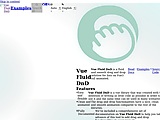
Vue Fluid DnD is a fluid, smooth and versatil drag and drop library for lists on Vue 3. It's a lightweight tool ~7 Kb (gzip) with no depenencies. This library is a Vue Draggable Next alternative if you looking for a better ui experience.
minor feature: lt;h2 gt; ing lt;/h2 gt;.
lt;ul gt;.
lt;li gt; lt;a href="https://github.com/carlosjorger/vue-fluid-dnd/commit/861384e00d22cb5ece61873ff194110998584bb1" gt;86138 lt;/a gt; Disable the initial animation right after inserting a new element. lt;/li gt;.
lt;/ul gt;.
vue3 web smooth lightweight typescript vue

Weblate is an open source web-based translation tool with version control. It includes several hundred languages with basic definitions, and enables the addition of more language definitions, all definitions can be edited by the web community or a defined set of people, as well as through integrating machine translation, such as DeepL, Amazon Translate, or Google Translate.
minor feature:
GNU GPLv3 translation localization web python html

A fast tiny dependency-less TypeScript library for NodeJS which enables developers to query Minecraft's Server List Ping interface, querying the MOTD, player count, max players and server version with little overhead and fine-grain control over the procedure.
minor bugfix: - Fixed bug from issue #4 (https://github.com/woodendoors7/MinecraftStatusPinger/issues/4) that caused incorrect parsing of status responses from modded servers.
- Added support for both CommonJS and ES module exports, and updated the module target to ESNext.
- Bumped the default protocol version from `767` (1.21.1) to `769` (1.21.4)
GNU GPLv3 minecraft nodejs node javascript tcp

OpenCSG is a library that does image-based CSG rendering using OpenGL. CSG is short for "constructive solid geometry" and represents a modeling technique for composing shapes with 3D-primitives which are combined using volumetric boolean operations. Image-based CSG rendering means rendering CSG shapes without calculating their surface in object-space. Instead, the image of a CSG shape is composed directly in the frame-buffer of the graphics hardware by rather sophisticated stenciling and z-buffer operations.
minor bugfix: This is a bugfix release. Most importantly, it makes the recently added GLSL vertex shader call also work with OpenGL versions 2.0 and 2.1. Before, an internal fragment shader had an OpenGL 3.0 requirement, and so rendering failed with older OpenGL versions.
GNU GPL c++ graphics opengl cad 3d-rendering

An opinionated and powerful finance tracker.
WYGIWYH (What You Get Is What You Have) is a powerful, principles-first finance tracker designed for people who prefer a no-budget, straightforward approach to managing their money. With features like multi-currency support, customizable transactions, and a built-in dollar-cost averaging tracker, WYGIWYH helps you take control of your finances with simplicity and flexibility.
Why WYGIWYH?
Managing money can feel unnecessarily complex, but it doesn’t have to be. WYGIWYH (pronounced "wiggy-wih") is based on a simple principle:
Use what you earn this month for this month. Any savings are tracked but treated as untouchable for future months.
By sticking to this straightforward approach, you avoid dipping into your savings while still keeping tabs on where your money goes.
While this philosophy is simple, finding tools to make it work wasn’t. I initially used a spreadsheet, which served me well for years—until it became unwieldy as I started managing multiple currencies, accounts, and investments. I tried various financial management apps, but none met my key requirements:
Multi-currency support to track income and expenses in different currencies.
Not a budgeting app — as I dislike budgeting constraints.
Web app usability (ideally with mobile support, though optional).
Automation-ready API to integrate with other tools and services.
Custom transaction rules for credit card billing cycles or similar quirks
minor feature: lt;h1 gt;Multi-tenancy is here lt;/h1 gt;.
lt;p gt;This update brings the much requested multi-tenancy feature, i.e. different users having different accesses to accounts and transactions. lt;/p gt;.
lt;h2 gt;How it works lt;/h2 gt;.
lt;p gt;Whenever a user creates a new Account, Account Group, Category, Tag, Entity or Rule, it will, by default, be attached to the originating user and viewable only by him. The owner them can share their items at any time with any user or all users as they see fit. lt;/p gt;.
lt;p gt;For simplicity, Currencies, Exchange Rates, and Import Profiles are shared by all users. lt;/p gt;.
lt;p gt;Admins can see and edit anything from any user via the Django Admin, so keep in mind who you give admin access to. lt;/p gt;.
lt;h2 gt;Migration Guide lt;/h2 gt;.
lt;p gt;Any existing objects created before this update will be owner-less, meaning they will have the same behavior from before: editable and viewable by all users. Under the Management pages you can take ownership of any object you desire, this is not required, but recommended if you plan to add new users to your WYGIWYH instance down the line. lt;/p gt;.
lt;hr gt;.
lt;h2 gt;What's Changed lt;/h2 gt;.
lt;ul gt;.
lt;li gt;feat(insights): add Emergency Fund simulator by lt;a class="user-mention notranslate" data-hovercard-type="user" data-hovercard-url="/users/eitchtee/hovercard" data-octo-click="hovercard-link-click" data-octo-dimensions="link_type:self" href="https://github.com/eitchtee" gt;@eitchtee lt;/a gt; in lt;a class="-link js--link" data-error-text="Failed to load title" data-id="2893036447" data-permission-text="Title is private" data-url="https://github.com/eitchtee/WYGIWYH//201" data-hovercard-type="pull_request" data-hovercard-url="/eitchtee/WYGIWYH/pull/201/hovercard" href="https://github.com/eitchtee/WYGIWYH/pull/201" gt;#201 lt;/a gt; lt;/li gt;.
lt;li gt;feat: multi tenancy support by lt;a class="user-mention notranslate" data-hovercard-type="user" data-hovercard-url=
Affero GPLv3 money finance tracking accounting self-hosted bookkeeping expense-tracker django python

Cairo is a 2D graphics library with support for multiple output devices. Currently supported output targets include the X Window System (via both Xlib and XCB), Quartz, Win32, image buffers, PostScript, PDF, and SVG file output.
Cairo is designed to produce consistent output on all output media while taking advantage of display hardware acceleration when available (eg. through the X Render Extension).
The cairo API provides operations similar to the drawing operators of PostScript and PDF. Operations in cairo including stroking and filling cubic Bézier splines, transforming and compositing translucent images, and antialiased text rendering. All drawing operations can be transformed by any affine transformation (scale, rotation, shear, etc.)
Cairo is implemented as a library written in the C programming language, but bindings are available for several different programming languages.
Cairo is free software and is available to be redistributed and/or modified under the terms of either the GNU Lesser General Public License (LGPL) version 2.1 or the Mozilla Public License (MPL) version 1.1 at your option.
minor feature: A new stable release. The dependency on LZO has been made optional through a build time. configuration toggle. !580 You can build Cairo against a Freetype installation that does not have the. FT_Color type. #792 Cairo tests now build on Solaris 11.4 with GCC 14. !599 . The DirectWrite backend now builds on MINGW 11. !600 . Thanks to Luca Bacci, the DirectWrite backend now supports font. variations and proper glyph coverage. #877, !602 Support for Windows 98 has been removed. The minimum requirement for. Windows is now Vista.
GNU LGPLv3 graphics vector library c

Kopia is a fast and secure open-source backup/restore tool that allows you to create encrypted snapshots of your data and save the snapshots to remote or cloud storage of your choice, to network-attached storage or server, or locally on your machine. Kopia does not 'image' your whole machine. Rather, Kopia allows you to backup/restore any and all files/directories that you deem are important or critical.
Kopia has both CLI (command-line interface) and GUI (graphical user interface) versions, making it the perfect tool for both advanced and regular users. You can read more about Kopia's unique features -- which include compression, deduplication, end-to-end 'zero knowledge' encryption, and error correction -- to get a better understanding of how Kopia works.
minor feature: Kopia v0.19 improves support for notifications, including:
ability to define notification profiles in the web UI/desktop app (in the Preferences tab). lt;li notification format tweaks and improvements. lt;li sending snapshot report notifications from servers. lt;/ul . lt;p Full change log follows:. lt;h3 Graphical User Interface. lt;ul . lt;li New Feature upgraded htmlui to the latest version by Kopia Builder bot . lt;li New Feature upgraded htmlui to the latest version by Kopia Builder bot . lt;li New Feature upgraded htmlui to the latest version by Kopia Builder bot . lt;/ul . lt;h3 KopiaUI App. lt;ul . lt;li New Feature support for desktop notifications by Jarek Kowalski. lt;li New Feature support for AppArmor on Ubuntu 24.04 by Jarek Kowalski. lt;/ul . lt;h3 General Improvements. lt;ul . lt;li reduce verbosity for noisy log message by Julio López. lt;li cleanup symlink tests by Julio López. lt;li New Feature misc notifications improvements by Jarek Kowalski. lt;/ul . lt;h3 Server. lt;ul . lt;li ensure server uploads "repodiag" blobs by Julio López. lt;li New Feature emit notifications as JSON to stderr when running under KopiaUI by Jarek Kowalski. lt;li New Feature only log successful authentication events when --log-server-requests is enabled by Jarek Kowalski. lt;/ul . lt;h3 Notifications. lt;ul . lt;li New Feature tweak snapshot report template by Jarek Kowalski. lt;li New Feature emit snapshot report notifications in the UI/server by Jarek Kowalski. lt;li New Feature improved notification templates by Jarek Kowalski. lt;/ul . lt;h3 Dependencies. lt;ul . lt;li bump codecov/codecov-action to 5.2.0 by Julio López. lt;li b
Apache backup cli cloud remote encryption go

Sonic Visualiser is a free, open-source application for Windows, Linux, and Mac, designed to be the first program you reach for when want to study a music recording closely. It's designed for musicologists, archivists, signal-processing researchers, and anyone else looking for a friendly way to look at what lies inside the audio file.
Sonic Visualiser is one of a family of four applications from the Centre for Digital Music:
Sonic Visualiser itself is the most general, a program for highly configurable detailed visualisation, analysis, and annotation of audio recordings.
Sonic Lineup is for rapid visualisation of multiple audio files containing versions of the same source material, such as performances from the same score, or different takes of an instrumental part.
Tony is for high quality pitch and note transcription for scientific applications, designed primarily for solo vocal recordings.
Sonic Annotator is a non-interactive command-line program application for batch audio feature extraction, using the same feature extraction plugins as Sonic Visualiser.
minor bugfix: Substantially improve responsiveness during scrolling and zooming.
With threaded repaints and various perceptual changes. This has the
Greatest effect on the Mac, where Sonic Visualiser was previously
Noticeably more sluggish than on other platforms. If threaded
Repaint causes instability, it can be disabled by setting the
SV_NO_THREADED_PAINT environment variable (to anything).
Habit of holding open the device microphone after recording.
- Improve compatibility with Vamp plugins that return unexpectedly.
Many values in features
- Improve compatibility with Vamp plugins that express units in.
Variant forms such as Hertz
Incorrect choice of UI language on systems with more than one
of the supported languages configured, and on which English that is.
Not explicitly regionalised to en_US or en_GB has a higher priority
Than any other supported language. Previously the first other
Matching language would have been used; now it will be en_US
GNU GPLv3 cpp qt audio analysis recording sound-synthesis vst vamp isophonics ladspa spectral visualization music
pwtool is a command line tool that provides a convenience for password generation and user creation.
minor feature: * change convenience variables to not include n
* new options --htauthfmt --mysqlfmt --pgfmt --userfmt --usermodfmt
GNU GPLv3 cli password systems-administration system-administrators

AdGuard Home is a network-wide software for blocking ads & tracking. After you set it up, it’ll cover ALL your home devices, and you don’t need any client-side software for that. With the rise of Internet-Of-Things and connected devices, it becomes more and more important to be able to control your whole network.
minor bugfix: See also the v0.107.57 GitHub milestone ms-v0.107.57 .
Security:
Go version has been updated to prevent the possibility of exploiting the Go vulnerabilities in 1.23.6 go-1.23.6 .
Added:
The ability to specify the upstream timeout in the Web UI.
Changed:
The *Fastest IP address upstream mode now correctly collects statistics for all upstream DNS servers.
:
The hostnames of DHCP clients not being shown in the *Top clients table on the dashboard ().
The formatting of large numbers in the upstream table and query log ().
https://github.com/AdguardTeam/AdGuardHome//7590.
https://github.com/AdguardTeam/AdGuardHome//7627.
go-1.23.6 : https://groups.google.com/g/golang-announce/c/xU1ZCHUZw3k.
ms-v0.107.57 : https://github.com/AdguardTeam/AdGuardHome/milestone/92?=1.
dns security tracking adblock adguard privacy golang javascript
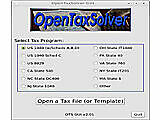
OpenTaxSolver (OTS) is a free safe & secure application for calculating your USA Federal 1040 and State income taxes. It has a graphical interface for easy entry of your information. OTS assists you in doing the otherwise tedious tax calculations, while showing the intermediate and final numbers. It can automatically fill-out your numbers onto the official government tax forms. Now covers State Taxes for OH, NC, NJ, NY, VA, PA, MA, AZ, CA, AZ, and MI.
minor feature: v22.05 (3/6/2025) - Promoted the new MI State form to OTS's front GUI panel. Fixed the new MI State Form line 34. In OH State Form's optional information section, added second address line, and county-code. In AZ State Form, now sets line 29a limit according to the number of tax-payers. Removed quotes around Dependent names in Form-1040 output to ease parsing in new upcoming form programs that will be using the Fed-1040 output.
GNU GPL taxes tax software tax deduction ots tax preparation free tax software

PacketFence is a network access control (NAC) manager. It includes numerous
features, including user registration and sanitation, central wireless and
cable-network control, BYOD (bring-your-own-device) configuration, 802.1X
support, and layer-2 device isolation. PacketFence is useful for managing
small to large networks and intranet-access points.
major bugfix: === New Features.
Upgrade to FreeRADIUS 3.2.6.
NTLM Auth multi-threaded machine-accounts.
OS based Cisco Switch Modules.
Secrets encrypted at rest.
=== Enhancements.
Use proxysql packages in the docker image instead of compilling from the sources.
Move SSO options to Firewall SSO from Advanced.
PKI - Multiple certificate with same Common Name.
Improved Ruckus Unbound DPSK.
Improved Docker images.
Support for case-insensitive LDAP Explorer attributes @E-ThanG.
Custom taggable LDAP Explorer attributes (e6435e8).
Performance improvements on pfacct.
Added Aruba-MPSK-password attribute.
Reduce time to flush the RADIUS log.
Improve DPSK.
Improve Mikrotik Disconnect.
Select the first device that matches MFA.
Improve pfdhcp DB connection.
Track TLS certificate attributes per node.
Kafka UI Config.
Netdata Upgrade.
Updated Cisco-WLC AireOS WiSM module.
FortiGate syslog DHCP parser.
Improved regex for Forti-analyser.
Update documentation for node-specific domain configuration file.
Add ProxySQL metrics to Netdata.
Add Webauth, DPSK and unbound DPSK for Juniper Mist.
Improve NTLM Auth API logging.
Update ip4log on RADIUS authentication request with Framed-Ip-Address.
===.
Don't generate all the time a mac address when using the GenericVPN switch module.
Add missing parameters for authentication rule match.
the dynamic role assignment for Aruba switch modules.
Show only registered nodes on status page.
pfperl-api restart.
deauthOnPrevious with webauth.
IP resolution on LDAP SSL verification.
NAS-Port to ifIndex on Comware v7 switches @bmp96.
Debian sudoers @andrew-grasso.
Clickatell Messages.
Fingerbank profile overwrite.
Clear person lookup cache after deleting a person.
pfconnector TCP/UDP port allocation.
set VLAN on generic SNMP switch.
unbound DPSK in Ruckus and OpenWifi switch module.
machine account creation on cluster.
=== Security.
Library updates.
==.
GNU GPL php perl administrator network security wireless web-based monitoring access-control
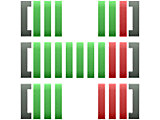
This is htop, an interactive process viewer for Unix systems. It is a text-mode application (for console or X terminals) and requires ncurses.
major bugfix: More expressive version tag generated for development versions (htop --version, help screen).
Improve Darwin support for ARM-based systems.
static linking with libsystemd.
Various build for DragonFlyBSD, Darwin, NetBSD, OpenBSD Solaris.
running task display (count).
sort order handling in tree mode.
Add warning when exiting with a signal (not saving.htoprc).
Add Disk I/O and Network I/O meter for DragonFlyBSD.
Improve handling of invalid Unicode strings.
Disable basename checking for kernel tasks.
Updated documentation for pcp-htop.
Disable FOCUS_IN/FOCUS_OUT event handling.
Add GPU meter for Linux and PCP.
Add colum for GPU time per process on Linux and PCP.
Avoid glibc FILE API voodoo.
Ignore previously unhandled signals USR1 and USR2.
Force locating the config file to only use absolute paths.
Prefer reading htoprc from /.config/htop/htoprc over legacy /.htoprc.
Force writing the configuration to a regular file.
Use distinct config files for htop and pcp-htop.
Link libnl3 at runtime.
Gather permitted capabilities via capget(2).
Avoid fetching certain process information for each thread on Linux (speed up).
Improved handling for invalid data in /proc/tty/drivers on Linux.
Various changes to avoid memory allocations inside signal handlers.
Add single column header layout.
DivByZero on startup on Darwin.
Include thread information on Darwin.
Show process state on Darwin.
Update compat check for C23 compilers.
Improved detail in help screen.
Unicode support for CGROUP, CCGROUP, CONTAINER and SECATTR columns.
Mark newline characters in the process command line display.
Resolve nested derived metrics for PCP.
Make supported modes/styles specific to each meter.
Refined checks for terminals supporting to redefine keys.
handling of the NICE value on FreeBSD.
display of CPU utilization on FreeBSD.
Honour update interval adjustments properly without restart.
Force rebuild of display table after item removals.
Reworked handling for
GNU GPL system-administrators linux freebsd openbsd macos monitoring ncurses c

GitLab is a development collaboration tool and git DVCS frontend. It includes repository management features, code reviews, an issue tracker, activity feeds and wikis.
GitLab provides fine-grained access control, user management, 5 permission levels and branch constraints, and can utilize LDAP/AD intranet authorization.
Powered by Ruby on Rails it comes as open source package, and as commercial supported enterprise version.
major feature: (2025-02-19).
### Added (202 changes).
Add GraphQL API for visualizing dedicated hosted runner compute usage (merge request) GitLab Enterprise Edition.
Adds the `experiment` status for analytics dashboards (merge request) GitLab Enterprise Edition.
Allow adding comments on Wiki pages (merge request).
Add integrity verification for remote CI includes (merge request).
Set default_enabled to true for feature flag (merge request) GitLab Enterprise Edition.
Set `default_enabled` to `true` for the feature flag (merge request) GitLab Enterprise Edition.
Remove maven_extract_package_model feature flag (merge request).
ActiveContext add preprocessors for references (merge request).
Add worker to unassign security bot (merge request) GitLab Enterprise Edition.
Introduce project.vulnerabilityArchives GraphQL field (merge request) GitLab Enterprise Edition.
ActiveContext postgres indexer (merge request).
Add support for created_at on work_items create API (merge request).
Add `Shared groups` tab to group overview (merge request).
Model registry: Support loading runs (merge request).
Add API endpoints for group level integrations (merge request).
Admin Token API: Revoke Feature Flags Client token by @nwittstruck (merge request).
Update flag for duo chat include file context (merge request) GitLab Enterprise Edition.
Add pipeline analytics for groups on GraphQL (merge request).
Add organization and job title to user synced attributes (merge request).
Query evaluator for expression control (merge request) GitLab Enterprise Edition.
Add vulnerability_severity_overrides table (merge request) GitLab Enterprise Edition.
Display dropdown text explainer on component token (merge request) GitLab Enterprise Edition.
feat: Protected packages: Maven package push protection by @gerardo-navarro (merge request).
Show message when approaching Pages deployments limit (merge request) GitLab Enterprise Edition.
Add error tracking widget to work items (merge request).
A
MITL ruby ruby-on-rails git dvcs wiki bugtracker version-control

Snaps are containerised software packages that are simple to create and install. They auto-update and are safe to run. And because they bundle their dependencies, they work on all major Linux systems without modification.
minor feature: lt;h2 gt;What's Changed lt;/h2 gt;.
lt;ul gt;.
lt;li gt;ci: publish snaps to arm64 by lt;a class="user-mention notranslate" data-hovercard-type="user" data-hovercard-url="/users/mr-cal/hovercard" data-octo-click="hovercard-link-click" data-octo-dimensions="link_type:self" href="https://github.com/mr-cal" gt;@mr-cal lt;/a gt; in lt;a class="-link js--link" data-error-text="Failed to load title" data-id="2845398115" data-permission-text="Title is private" data-url="https://github.com/canonical/snapcraft//5248" data-hovercard-type="pull_request" data-hovercard-url="/canonical/snapcraft/pull/5248/hovercard" href="https://github.com/canonical/snapcraft/pull/5248" gt;#5248 lt;/a gt; lt;/li gt;.
lt;li gt;: correct git errors in flutter plugin by lt;a class="user-mention notranslate" data-hovercard-type="user" data-hovercard-url="/users/bepri/hovercard" data-octo-click="hovercard-link-click" data-octo-dimensions="link_type:self" href="https://github.com/bepri" gt;@bepri lt;/a gt; in lt;a class="-link js--link" data-error-text="Failed to load title" data-id="2861644961" data-permission-text="Title is private" data-url="https://github.com/canonical/snapcraft//5264" data-hovercard-type="pull_request" data-hovercard-url="/canonical/snapcraft/pull/5264/hovercard" href="https://github.com/canonical/snapcraft/pull/5264" gt;#5264 lt;/a gt; lt;/li gt;.
lt;/ul gt;.
lt;p gt; lt;strong gt;Full Changelog lt;/strong gt;: lt;a class="commit-link" href="https://github.com/canonical/snapcraft/compare/8.7.0...8.7.1" gt; lt;tt gt;8.7.0...8.7.1 lt;/tt gt; lt;/a gt; lt;/p gt;.
GNU GPLv3 snaps linux packaging distribution python cpp

Gifsicle is a command-line tool for creating, editing, and getting information about GIF images and animations. Making a GIF animation with gifsicle is easy:
gifsicle --delay=10 --loop *.gif > anim.gif
Extracting frames from animations is easy too:
gifsicle anim.gif '#0' > firstframe.gif
You can also edit animations by replacing, deleting, or inserting frames:
gifsicle -b anim.gif --replace '#0' new.gif
Some more gifsicle features:
Batch mode for changing GIFs in place.
Prints detailed information about GIFs, including comments.
Control over interlacing, comments, looping, transparency...
Creates well-behaved GIFs: removes redundant colors, only uses local color tables if it absolutely has to (local color tables waste space and can cause viewing artifacts), etc.
It can shrink colormaps and change images to use the Web-safe palette (or any colormap you choose).
Optimize your animations! This stores only the changed portion of each frame, and can radically shrink your GIFs. You can also use transparency to make them even smaller. Gifsicle’s optimizer is pretty powerful, and usually reduces animations to within a couple bytes of the best commercial optimizers.
Unoptimizing animations, which makes them easier to edit.
A dumb name.
Two other programs are included with gifsicle: gifview is a lightweight animated-GIF viewer which can show animations as slideshows or in real time, and gifdiff compares two GIFs for identical visua
minor feature: `--lossy` measures color errors uses the currently selected color space. It also uses a different.
Algorithm for computing color differences.
As a result, the `--lossy=N` option behaves differently in version 1.96 than
in previous versions. A given value of `N` may compress less than you.
Expect. The t analogue to previous versions will be obtained with
`--lossy=N --gamma=1`.
Improve handling of GIFs with images positioned far outside the logical.
Screen. This can greatly reduce memory usage.
Add preliminary support for the Oklab color space (`--gamma=oklab`).
Add support for `--dither=atkinson`.
Add support for `--use-exact-colormap`.
Some.
gif cli graphics images c perl roff
Joplin is a free, open source note taking and to-do application, which can handle a large number of notes organised into notebooks. The notes are searchable, can be copied, tagged and modified either from the applications directly or from your own text editor. The notes are in Markdown format.
Notes exported from Evernote can be imported into Joplin, including the formatted content (which is converted to Markdown), resources (images, attachments, etc.) and complete metadata (geolocation, updated time, created time, etc.). Plain Markdown files can also be imported.
Joplin is "offline first", which means you always have all your data on your phone or computer. This ensures that your notes are always accessible, whether you have an internet connection or not.
The notes can be securely synchronised using end-to-end encryption with various cloud services including Nextcloud, Dropbox, OneDrive and Joplin Cloud.
Full text search is available on all platforms to quickly find the information you need. The app can be customised using plugins and themes, and you can also easily create your own.
minor feature: lt;ul gt;.
lt;li gt;Improved: Accessibility: Make click outside of dialog content be cancellable lt;/li gt;.
lt;li gt;Improved: Improve behaviour of note list to-dos when ticking a checkbox using the keyboard ( lt;a class="commit-link" data-hovercard-type="commit" data-hovercard-url="https://github.com/laurent22/joplin/commit/44c735afac8b087ac77d05d2b9882ad24f79c605/hovercard" href="https://github.com/laurent22/joplin/commit/44c735afac8b087ac77d05d2b9882ad24f79c605" gt; lt;tt gt;44c735a lt;/tt gt; lt;/a gt;) lt;/li gt;.
lt;li gt;Improved: Improve usability of note list when ticking to-dos using the Space key lt;/li gt;.
lt;li gt;Improved: Plugins: Simplify getting the ID of the note open in an editor lt;/li gt;.
lt;li gt;: OneNote importer not being able to handle corrupted attachments lt;/li gt;.
lt;li gt;: Rich Text right-click and paste regressions lt;/li gt;.
lt;li gt;: Hide extra clear button in search field lt;/li gt;.
lt;li gt;: Preserve attachment file extensions regardless of the mime type lt;/li gt;.
lt;/ul gt;.
Affero GPLv3 note-taking todo markdown typescript javascript

Self-hosted photo and video management solution
Easily back up, organize, and manage your photos on your own server. Immich helps you browse, search and organize your photos and videos with ease, without sacrificing your privacy.
minor feature: lt;h1 gt;v1.129.0 lt;/h1 gt;.
lt;p gt;Welcome to release lt;code gt;v1.129.0 lt;/code gt; of Immich. The road-to-stable is bumpy, but at least, we have lt;em gt;made memories lt;/em gt; together with the recent changes and with the new memories implementation . We owe you an explanation for the changes. Please find it, along with the highlights of this release below: lt;/p gt;.
lt;ul gt;.
lt;li gt;Videos in memories are now playable on the web. lt;/li gt;.
lt;li gt;Shortcuts ( lt;code gt;L lt;/code gt; and lt;code gt;Shift+L lt;/code gt;) to add assets to an album or shared album on the web. lt;/li gt;.
lt;li gt;an where opening Immich pauses playing music on iOS lt;/li gt;.
lt;li gt;The shared link now has a generated QR code for easier sharing. lt;/li gt;.
lt;/ul gt;.
lt;p align="center" gt;.
lt;a target="_blank" rel="noopener noreferrer" href="https://private-user-images.githubusercontent.com/27055614/419634334-4e65dcab-c4c8-4394-8d0e-9fcddcc9da59.png?jwt=eyJhbGciOiJIUzI1NiIsInR5cCI6IkpXVCJ9.eyJpc3MiOiJnaXRodWIuY29tIiwiYXVkIjoicmF3LmdpdGh1YnVzZXJjb250ZW50LmNvbSIsImtleSI6ImtleTUiLCJleHAiOjE3NDEyMzEyMDIsIm5iZiI6MTc0MTIzMDkwMiwicGF0aCI6Ii8yNzA1NTYxNC80MTk2MzQzMzQtNGU2NWRjYWItYzRjOC00Mzk0LThkMGUtOWZjZGRjYzlkYTU5LnBuZz9YLUFtei1BbGdvcml0aG09QVdTNC1ITUFDLVNIQTI1NiZYLUFtei1DcmVkZW50aWFsPUFLSUFWQ09EWUxTQTUzUFFLNFpBJTJGMjAyNTAzMDYlMkZ1cy1lYXN0LTElMkZzMyUyRmF3czRfcmVxdWVzdCZYLUFtei1EYXRlPTIwMjUwMzA2VDAzMTUwMlomWC1BbXotRXhwaXJlcz0zMDAmWC1BbXotU2lnbmF0dXJlPTNkZjE2ODAzNmIwYzNkMjlhOWFjOGRmZWI5ZDU1MDBiYzM4MTQzYjQ5ODQ1YzMxOGMzMzIxMjYxM2UxMTU0YzMmWC1BbXotU2lnbmVkSGVhZGVycz1ob3N0In0.Ic6hxmyVjtzu49jnd2nUGfQaNFqVVxYp8m7HyoT57Iw" gt; lt;img src="https://private-user-images.githubusercontent.com/27055614/419634334-4e65dcab-c4c8-4394-8d0e-9fcddcc9da59.png?jwt=eyJhbGciOiJIUzI1NiIsInR5cCI6IkpXVCJ9.eyJpc3MiOiJnaXRodWIuY29tIiwiYXVkIjoicmF3LmdpdGh1YnVzZXJjb250ZW50LmNvbSIsImtleSI6ImtleTUiLCJleHAiOjE3NDEyMzEyMDIsIm5iZiI6MTc0MTIzMDkwMiwicGF0aCI6Ii8yNzA1NTYxNC80MTk2MzQzMzQtNGU2NWRjYWItYzRjOC
Affero GPLv3 self-hosted backup photos photography video server typescript javascript svelte dart python

LSP (Linux Studio Plugins) is a collection of open-source plugins currently compatible with CLAP, LADSPA, LV2, VST2/LinuxVST, VST3 and JACK standalone formats.
The basic idea is to fill the lack of good and useful plugins under the GNU/Linux platform.
After some contributions to other open source projects the decision was made to implement separate and independent plugin distribution.
minor feature: Implemented default OpenGL rendering engine for the UI for X11-based operating systems. The rendering engine can be switched back to Cairo by setting LSP_WS_LIB_GLXSURFACE=off environment variable. Added possibility to use custom scaling for each plugin bundle. Added highlighting of active item in file navigator nearby sample preview. Several optimizations related to scaling widgets in the graphical toolkit library. Updated several core libraries for better support of MacOS. Additional AVX-512 optimizations of code DSP library. Several changes in Sampler and Multisampler plugin series: Implemented possibility to Drag Drop drumkits, SFZ files and LSPC files directly to the plugin's window for import purpose. Muting button does not disable the listen button. Added 'velocity' button that allows to disable or enable the volume control of a sample by the velocity value of the MIDI note. Added automatic instrument name assign same to current sample file name if UI behavior option 'Take instrument name from file' is enabled and the name of instrument is empty or similar to currently selected sample file. Updated several labels in the UI. Added workaround for Renoise host related to latency reporting by VST2 and VST3 plugins on state load. unnecessary output parameter cleanup when importing configuration that caused several when importing plugin state from file. regression related to impossibility of setting proper values for in several parameters in the VST3 plugin format. some typos in UI.
GNU LGPLv3 audio plugins music vst jack clap ladspa cpp makefile

The qBittorrent project aims to provide an open-source software alternative to µTorrent.
Additionally, qBittorrent runs and provides the same features on all major platforms (Linux, Mac OS X, Windows, OS/2, FreeBSD).
qBittorrent is based on the Qt toolkit and libtorrent-rasterbar library.
minor feature: cannot remove trackers via WebAPI (Chocobo1). : torrent content checkbox state under certain conditions (thalieht). : Hide zero and infinity values in peer list only when that setting is set to. Always (thalieht). : Remove stopped torrent from "error" tracker filter (glassez). WEBUI: memory leak in context menus (skomerko). WEBAPI: Don't trim string parameters (glassez). WINDOWS: Handle Qt style options uniformly (glassez). WINDOWS: NSIS: Update Portuguese translation (Hugo Carvalho). MACOS: Avoid memory leak (Chocobo1).
Apache internet download torrent bittorent file-sharing cpp javascript html python qt

The qBittorrent project aims to provide an open-source software alternative to µTorrent.
Additionally, qBittorrent runs and provides the same features on all major platforms (Linux, Mac OS X, Windows, OS/2, FreeBSD).
qBittorrent is based on the Qt toolkit and libtorrent-rasterbar library.
minor feature: cannot remove trackers via WebAPI (Chocobo1). : torrent content checkbox state under certain conditions (thalieht). : Hide zero and infinity values in peer list only when that setting is set to. Always (thalieht). : Remove stopped torrent from "error" tracker filter (glassez). WEBUI: memory leak in context menus (skomerko). WEBAPI: Don't trim string parameters (glassez). WINDOWS: Handle Qt style options uniformly (glassez). WINDOWS: NSIS: Update Portuguese translation (Hugo Carvalho). MACOS: Avoid memory leak (Chocobo1).
Apache internet download torrent bittorent file-sharing cpp javascript html python qt

The qBittorrent project aims to provide an open-source software alternative to µTorrent.
Additionally, qBittorrent runs and provides the same features on all major platforms (Linux, Mac OS X, Windows, OS/2, FreeBSD).
qBittorrent is based on the Qt toolkit and libtorrent-rasterbar library.
minor feature: cannot remove trackers via WebAPI (Chocobo1). : torrent content checkbox state under certain conditions (thalieht). : Hide zero and infinity values in peer list only when that setting is set to. Always (thalieht). : Remove stopped torrent from "error" tracker filter (glassez). WEBUI: memory leak in context menus (skomerko). WEBAPI: Don't trim string parameters (glassez). WINDOWS: Handle Qt style options uniformly (glassez). WINDOWS: NSIS: Update Portuguese translation (Hugo Carvalho). MACOS: Avoid memory leak (Chocobo1).
Apache internet download torrent bittorent file-sharing cpp javascript html python qt

The qBittorrent project aims to provide an open-source software alternative to µTorrent.
Additionally, qBittorrent runs and provides the same features on all major platforms (Linux, Mac OS X, Windows, OS/2, FreeBSD).
qBittorrent is based on the Qt toolkit and libtorrent-rasterbar library.
minor feature: cannot remove trackers via WebAPI (Chocobo1). : torrent content checkbox state under certain conditions (thalieht). : Hide zero and infinity values in peer list only when that setting is set to. Always (thalieht). : Remove stopped torrent from "error" tracker filter (glassez). WEBUI: memory leak in context menus (skomerko). WEBAPI: Don't trim string parameters (glassez). WINDOWS: Handle Qt style options uniformly (glassez). WINDOWS: NSIS: Update Portuguese translation (Hugo Carvalho). MACOS: Avoid memory leak (Chocobo1).
Apache internet download torrent bittorent file-sharing cpp javascript html python qt

The qBittorrent project aims to provide an open-source software alternative to µTorrent.
Additionally, qBittorrent runs and provides the same features on all major platforms (Linux, Mac OS X, Windows, OS/2, FreeBSD).
qBittorrent is based on the Qt toolkit and libtorrent-rasterbar library.
minor feature: cannot remove trackers via WebAPI (Chocobo1). : torrent content checkbox state under certain conditions (thalieht). : Hide zero and infinity values in peer list only when that setting is set to. Always (thalieht). : Remove stopped torrent from "error" tracker filter (glassez). WEBUI: memory leak in context menus (skomerko). WEBAPI: Don't trim string parameters (glassez). WINDOWS: Handle Qt style options uniformly (glassez). WINDOWS: NSIS: Update Portuguese translation (Hugo Carvalho). MACOS: Avoid memory leak (Chocobo1).
Apache internet download torrent bittorent file-sharing cpp javascript html python qt

The qBittorrent project aims to provide an open-source software alternative to µTorrent.
Additionally, qBittorrent runs and provides the same features on all major platforms (Linux, Mac OS X, Windows, OS/2, FreeBSD).
qBittorrent is based on the Qt toolkit and libtorrent-rasterbar library.
minor feature: cannot remove trackers via WebAPI (Chocobo1). : torrent content checkbox state under certain conditions (thalieht). : Hide zero and infinity values in peer list only when that setting is set to. Always (thalieht). : Remove stopped torrent from "error" tracker filter (glassez). WEBUI: memory leak in context menus (skomerko). WEBAPI: Don't trim string parameters (glassez). WINDOWS: Handle Qt style options uniformly (glassez). WINDOWS: NSIS: Update Portuguese translation (Hugo Carvalho). MACOS: Avoid memory leak (Chocobo1).
Apache internet download torrent bittorent file-sharing cpp javascript html python qt

The qBittorrent project aims to provide an open-source software alternative to µTorrent.
Additionally, qBittorrent runs and provides the same features on all major platforms (Linux, Mac OS X, Windows, OS/2, FreeBSD).
qBittorrent is based on the Qt toolkit and libtorrent-rasterbar library.
minor feature: cannot remove trackers via WebAPI (Chocobo1). : torrent content checkbox state under certain conditions (thalieht). : Hide zero and infinity values in peer list only when that setting is set to. Always (thalieht). : Remove stopped torrent from "error" tracker filter (glassez). WEBUI: memory leak in context menus (skomerko). WEBAPI: Don't trim string parameters (glassez). WINDOWS: Handle Qt style options uniformly (glassez). WINDOWS: NSIS: Update Portuguese translation (Hugo Carvalho). MACOS: Avoid memory leak (Chocobo1).
Apache internet download torrent bittorent file-sharing cpp javascript html python qt

The qBittorrent project aims to provide an open-source software alternative to µTorrent.
Additionally, qBittorrent runs and provides the same features on all major platforms (Linux, Mac OS X, Windows, OS/2, FreeBSD).
qBittorrent is based on the Qt toolkit and libtorrent-rasterbar library.
minor feature: cannot remove trackers via WebAPI (Chocobo1). : torrent content checkbox state under certain conditions (thalieht). : Hide zero and infinity values in peer list only when that setting is set to. Always (thalieht). : Remove stopped torrent from "error" tracker filter (glassez). WEBUI: memory leak in context menus (skomerko). WEBAPI: Don't trim string parameters (glassez). WINDOWS: Handle Qt style options uniformly (glassez). WINDOWS: NSIS: Update Portuguese translation (Hugo Carvalho). MACOS: Avoid memory leak (Chocobo1).
Apache internet download torrent bittorent file-sharing cpp javascript html python qt

The qBittorrent project aims to provide an open-source software alternative to µTorrent.
Additionally, qBittorrent runs and provides the same features on all major platforms (Linux, Mac OS X, Windows, OS/2, FreeBSD).
qBittorrent is based on the Qt toolkit and libtorrent-rasterbar library.
minor feature: cannot remove trackers via WebAPI (Chocobo1). : torrent content checkbox state under certain conditions (thalieht). : Hide zero and infinity values in peer list only when that setting is set to. Always (thalieht). : Remove stopped torrent from "error" tracker filter (glassez). WEBUI: memory leak in context menus (skomerko). WEBAPI: Don't trim string parameters (glassez). WINDOWS: Handle Qt style options uniformly (glassez). WINDOWS: NSIS: Update Portuguese translation (Hugo Carvalho). MACOS: Avoid memory leak (Chocobo1).
Apache internet download torrent bittorent file-sharing cpp javascript html python qt

The qBittorrent project aims to provide an open-source software alternative to µTorrent.
Additionally, qBittorrent runs and provides the same features on all major platforms (Linux, Mac OS X, Windows, OS/2, FreeBSD).
qBittorrent is based on the Qt toolkit and libtorrent-rasterbar library.
minor feature: cannot remove trackers via WebAPI (Chocobo1). : torrent content checkbox state under certain conditions (thalieht). : Hide zero and infinity values in peer list only when that setting is set to. Always (thalieht). : Remove stopped torrent from "error" tracker filter (glassez). WEBUI: memory leak in context menus (skomerko). WEBAPI: Don't trim string parameters (glassez). WINDOWS: Handle Qt style options uniformly (glassez). WINDOWS: NSIS: Update Portuguese translation (Hugo Carvalho). MACOS: Avoid memory leak (Chocobo1).
Apache internet download torrent bittorent file-sharing cpp javascript html python qt

The qBittorrent project aims to provide an open-source software alternative to µTorrent.
Additionally, qBittorrent runs and provides the same features on all major platforms (Linux, Mac OS X, Windows, OS/2, FreeBSD).
qBittorrent is based on the Qt toolkit and libtorrent-rasterbar library.
minor feature: cannot remove trackers via WebAPI (Chocobo1). : torrent content checkbox state under certain conditions (thalieht). : Hide zero and infinity values in peer list only when that setting is set to. Always (thalieht). : Remove stopped torrent from "error" tracker filter (glassez). WEBUI: memory leak in context menus (skomerko). WEBAPI: Don't trim string parameters (glassez). WINDOWS: Handle Qt style options uniformly (glassez). WINDOWS: NSIS: Update Portuguese translation (Hugo Carvalho). MACOS: Avoid memory leak (Chocobo1).
Apache internet download torrent bittorent file-sharing cpp javascript html python qt
|

